Record 039
Hangzhou: built on trade
IDENTITY
| No. | 039 |
|---|---|
| Category | regional |
| Record basis | Concept / AI illustration |
| Originally published | unrecorded |
OBSERVED
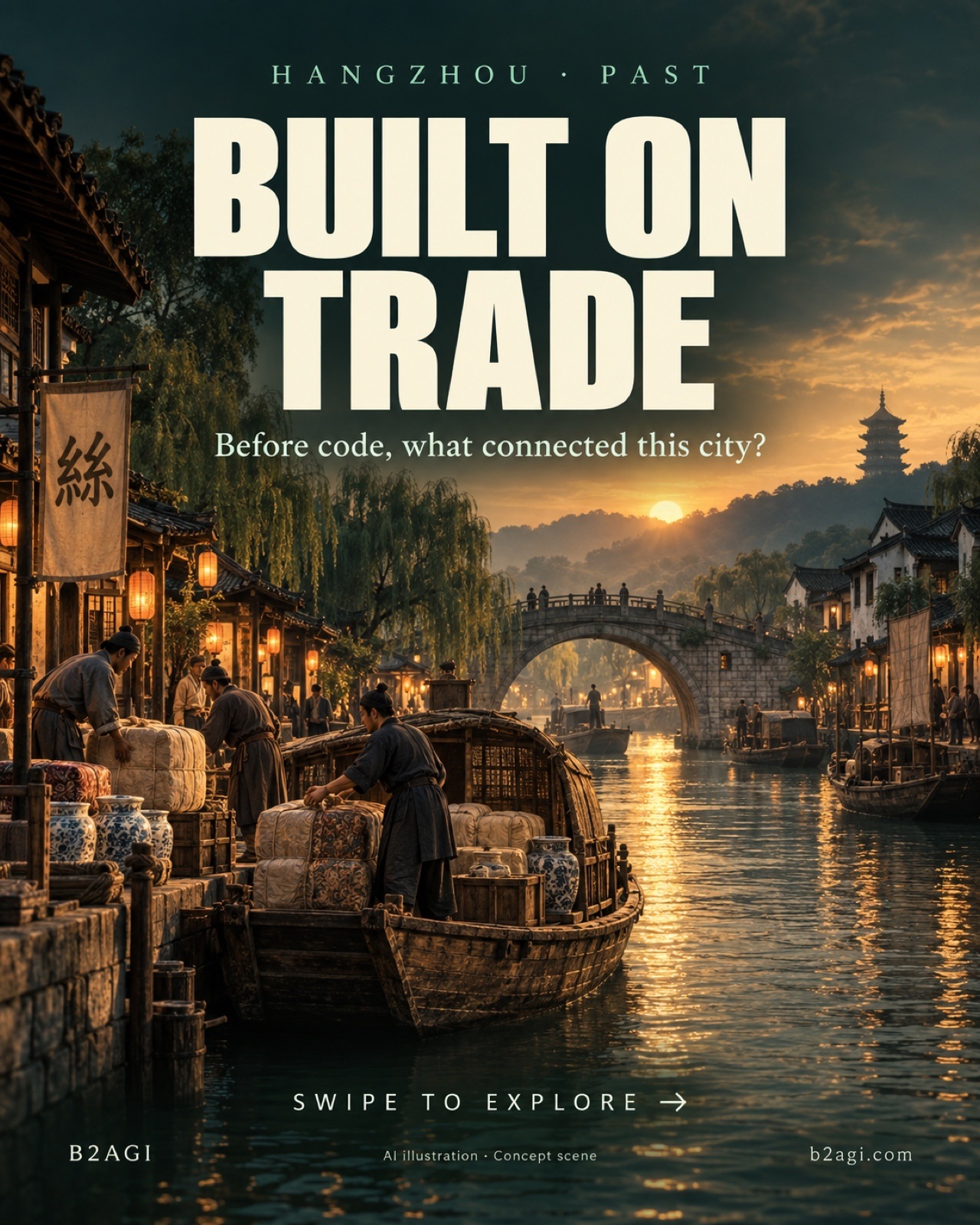
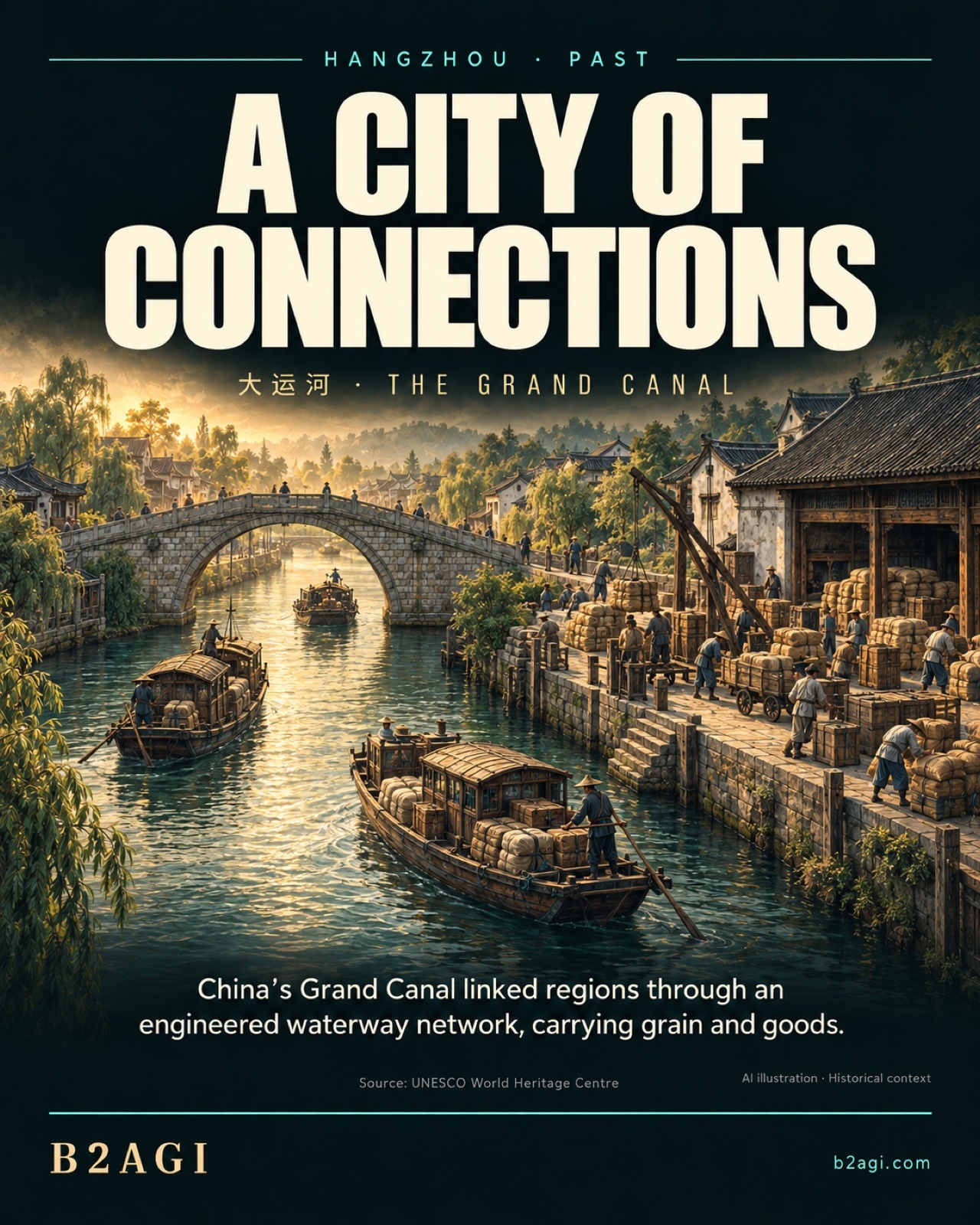
Before code, what connected this city? Hangzhou: Past looks beyond the skyline to trade, craft and infrastructure. UNESCO's Grand Canal account describes a waterway network carrying grain and other materials, providing historical context for this series.
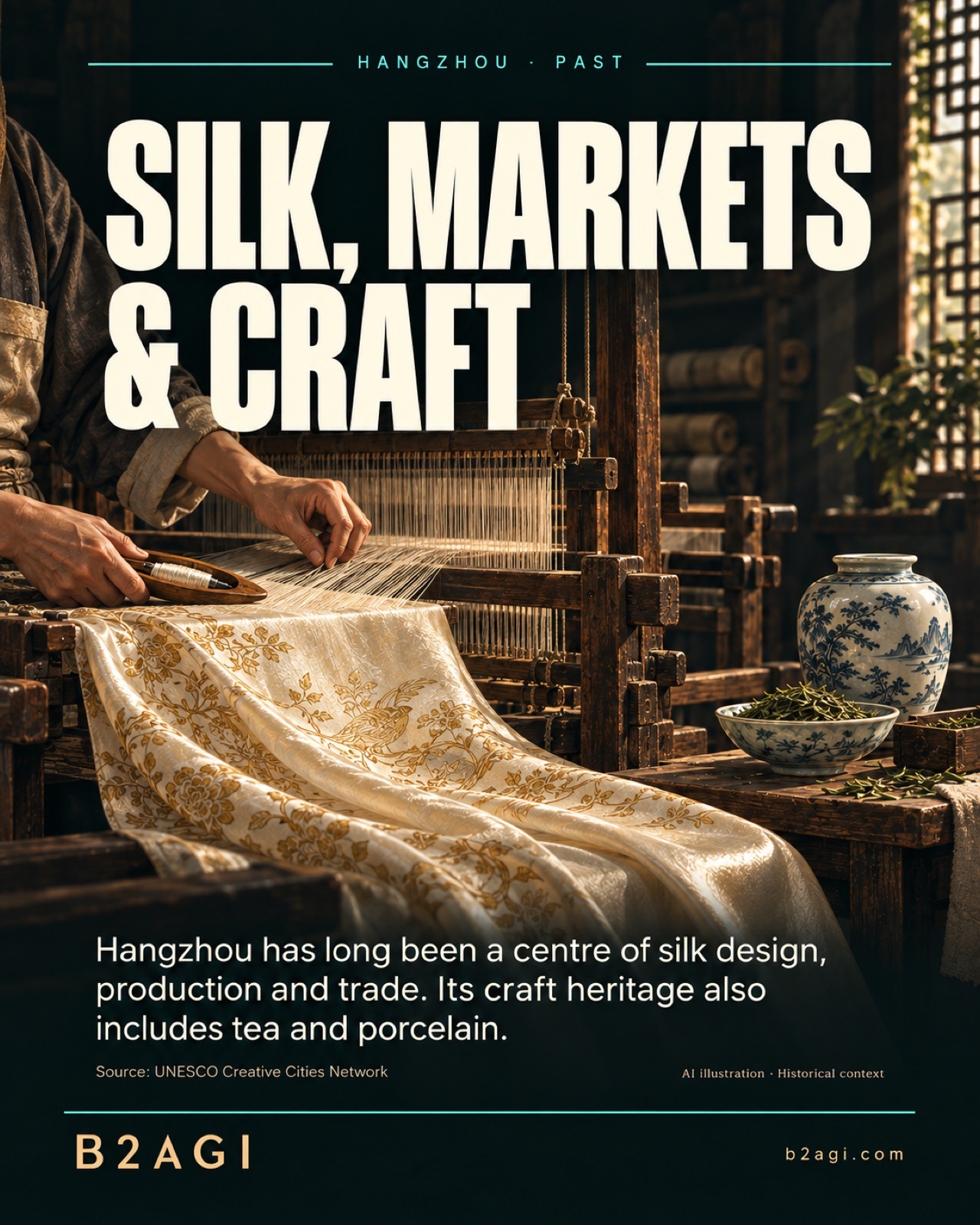
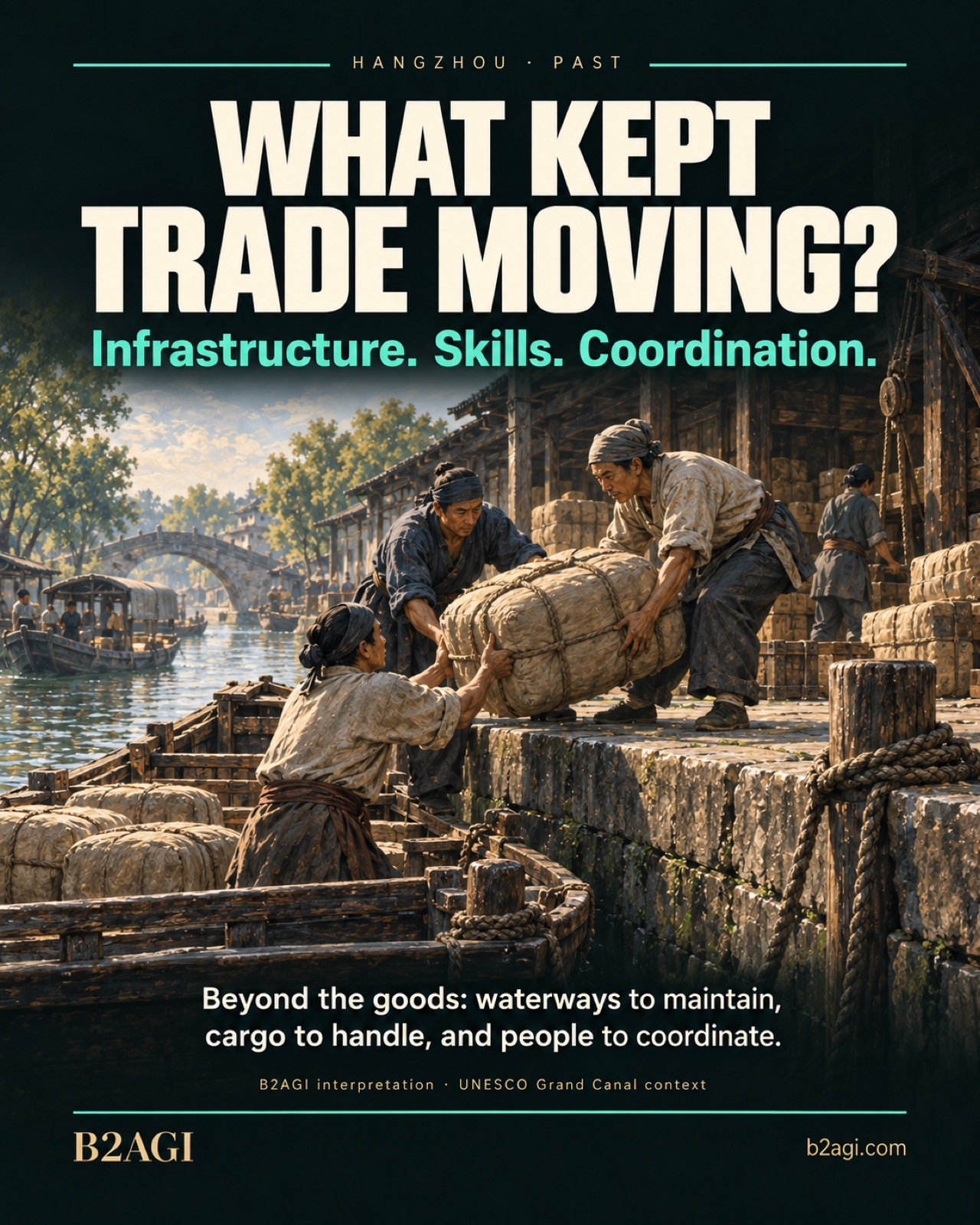
Waterways, markets, craft, people and infrastructure are the five lenses in the original caption. A finished product shows only part of the work; makers, merchants, transport and the connections between them also matter.
A silk workshop and a robotics company belong to different worlds. B2AGI is not claiming they are equivalent. The comparison is a question about skills, customers and what allows work to continue: useful technology depends on relationships and supporting systems as well as a product.
Trade, code and physical AI are the three perspectives of the wider Hangzhou series. The scenes here are AI historical illustrations, not archival photographs or exact reconstructions. The connection to today's robotics is B2AGI's interpretation, not UNESCO's conclusion.
Written from the supplied media and the cited sources. This is distinct from the original Instagram caption. Publication and media-rights review remain pending.
2026-09-18 · Original media retained; three-language web text added with explicit evidence limits. The earlier local review was followed by the first public web edition on this date.
First web edition: 2026-09-18 · Web edition updated: 2026-09-18 Web dates are separate from observation and original-post dates.
Shared subject; each record retains its own evidence limits.
Original caption — preserved as published
Before code, what connected this city? HANGZHOU — BUILT ON TRADE 🛶🏮🇨🇳 杭州 · PAST Before digital marketplaces, there were waterways, workshops and markets. Hangzhou’s canal connections and traditions of silk, tea and craftsmanship offer a way to read the city beyond its skyline. A finished product was only part of the story. Behind it were people who made it, merchants who traded it, boats that carried it and infrastructure that kept goods moving. Swipe to explore the connections behind the commerce → Waterways → Markets → Craft → People → Infrastructure Why does B2AGI look at this history? Because understanding technology also means understanding the systems that make it useful. A silk workshop and a robotics company belong to very different worlds. Yet both invite us to look beyond the finished object: What skills does it depend on? How does it reach customers? What keeps the work moving? B2AGI take: Look beyond the product. Look at the people, infrastructure and relationships that allow it to create value. This is our starting point for reading Hangzhou through three lenses: TRADE · CODE · PHYSICAL AI Next chapter: POWERED BY CODE — how commerce connects through software. 📍 Hangzhou · Zhejiang · China 📖 Lens: Trade · craft · urban infrastructure 🔎 Basis: UNESCO heritage and creative-city materials 🎨 Visuals: AI illustrations inspired by historical settings; not archival images or exact reconstructions B2AGI — Physical AI Deployment Intelligence We go where intelligence becomes physical. 🌐 b2agi.com
#B2AGI #Hangzhou #China #UrbanHistory #PhysicalAI
PRESERVED MEDIA
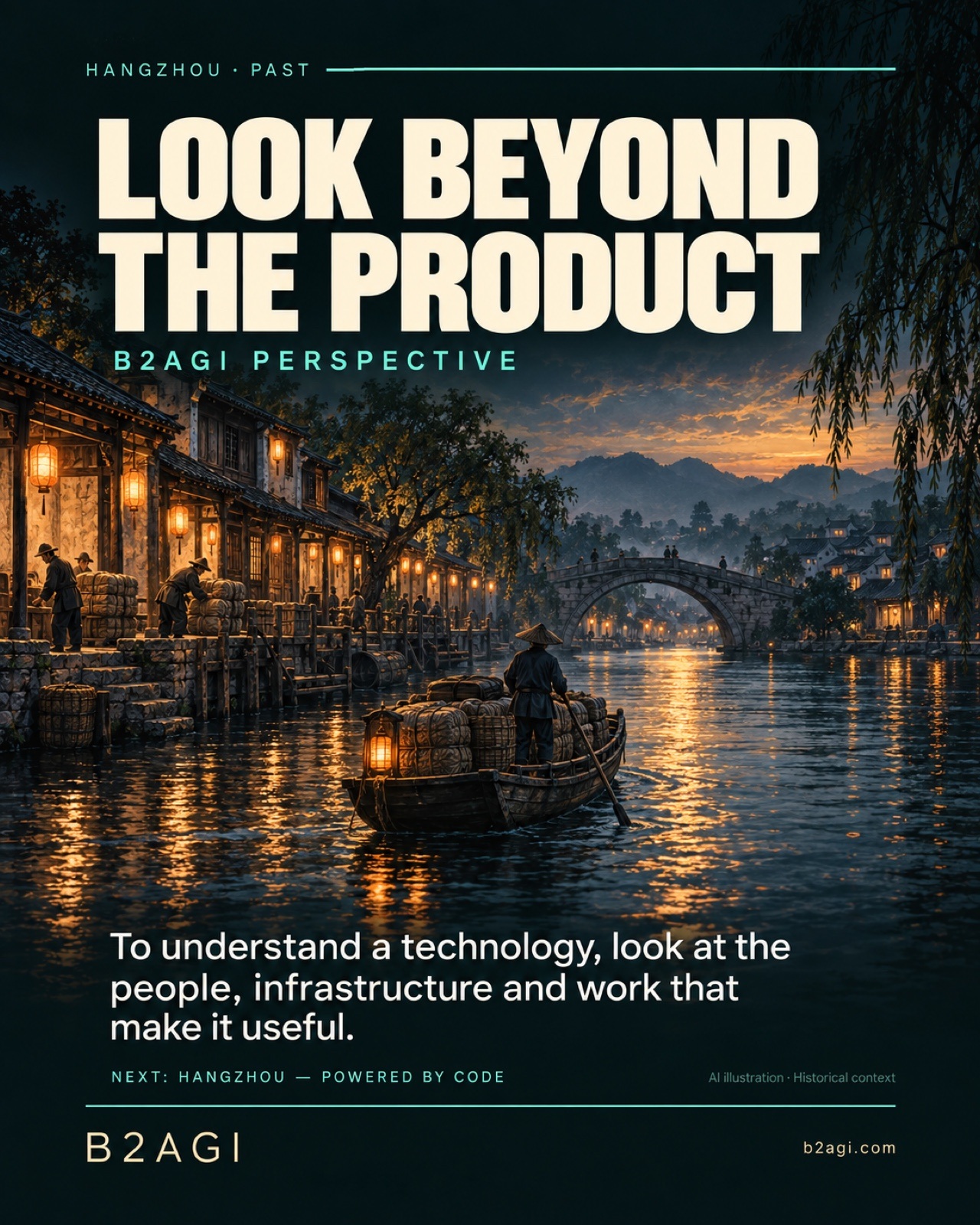
Original media. Embedded text and audio remain in their source languages; this is not a dubbed or translated media edition.
CLAIMED
unrecorded
PERSISTENCE
| status | historical_record |
|---|---|
| intervention rate | not measured |
| uptime | not measured |
| next check | unrecorded |
UNKNOWN / OPEN
Editorial note This regional overview is editorial context. Its illustrations and maps are not evidence that every depicted product or facility was observed on site.
EVIDENCE / SOURCES
- Original publication (legacy URL — redirects here) ↗
- /archive-media/39/ — Original media (preservation pending — not embedded)
RELATED / NEXT
TRACE STATUS
record · restored 2026-09-26 from the original publication of unrecorded